Cost & reliability
Find the line items quietly draining your budget and cut them — right-sizing, autoscaling, bin-packing, killing idle spend — then make deploys boring enough that nobody gets paged at 3am. Boring beats clever.
For scaling teams whose AWS or Kubernetes bill is growing faster than revenue. I find the waste, cut it, and keep deploys boring — and I build the systems most engineers only host. Fixed scope, no bodyshopping.
Find the line items quietly draining your budget and cut them — right-sizing, autoscaling, bin-packing, killing idle spend — then make deploys boring enough that nobody gets paged at 3am. Boring beats clever.
Kubernetes — but only if you actually need it. Set up to grow when traffic spikes and shrink (with the bill) when it doesn't, minus the thousands of lines of YAML nobody understands.
Get onto AWS or GCP without a scary big-bang weekend. We move what's worth moving, skip what isn't, and keep everything running while we do it.
Make shipping a non-event: you push, it deploys, everyone moves on. The whole setup lives in Terraform — reviewed, versioned, and rebuildable from scratch.
Where this leads: infrastructure you can stop thinking about — so your team gets back to building the product, not babysitting servers.
Beyond ops, I also review architecture, audit AI-built apps, and take ideas to production.See all services →
A free call and a look at your stack. I find the quick wins and the real risks — no jargon, no upsell.
A clear, prioritized roadmap with effort, cost, and expected impact. You decide what gets done and when.
I implement alongside your team, document everything, and leave you able to run it without me.
Chatter is a privacy-first encrypted messenger I build solo — one Rust client (Slint) running on Linux, Windows, and Android today, with iOS and macOS planned, on a Go backend with full Signal Protocol end-to-end encryption. When I say I understand your infrastructure deeply, this is the receipt: cryptography to deployment, one person, real correctness stakes. Most DevOps consultants can only host systems like this. I build them.
I'm a DevOps engineer with 6+ years shipping cloud infrastructure on AWS, Kubernetes, and Terraform — and my specialty is cutting cloud and Kubernetes bills without sacrificing reliability. On my team I own security reviews and performance tuning — the same eye for risk, waste, and slow paths I bring to your stack. What sets me apart: I don't just operate systems, I build them from scratch — like Chatter, an encrypted messenger with Signal-grade cryptography I develop solo. That depth is why I find waste and risk other people miss. I care about boring, reliable systems and explain the trade-offs in plain language, not buzzwords.
I find what's slow, expensive, or fragile in your infrastructure and fix it — then set things up so your own team can run it after I leave. The goal is to make myself unnecessary, not to lock you into me.
No scary big-bang weekend. We move one piece at a time, keep production running the whole way, and roll back the moment anything looks off. Most migrations finish without users noticing.
Honestly, often not. If a handful of containers or managed services do the job, that's what you get. Kubernetes only goes in when your scale or complexity actually earns the extra moving parts.
It starts with a free call and a look at your stack. From there you get a fixed-scope proposal or a day rate — your choice. You approve the plan and the cost before any work begins.
Usually within a week or two. I work alongside your engineers rather than over them, document everything as I go, and hand it over so nothing depends on me being around.
Book a free 30-minute call. We'll find the quickest wins in your infrastructure — no commitment.
Book a free discovery call
Karpenter vs Cluster Autoscaler on EKS: mechanics, Spot, and consolidation — where the documented 20–50% cost savings come from, and when the gap shrinks.
Karpenter vs Cluster Autoscaler: The Real Cost Difference on EKS (2026) — Read more →
A data-backed 2026 playbook to reduce EKS and AWS costs 30–50% — right-sizing, Karpenter, Graviton, Spot, and Savings Plans — without touching reliability.
How to Reduce EKS and AWS Costs 30–50% in 2026 (Without Hurting Reliability) — Read more →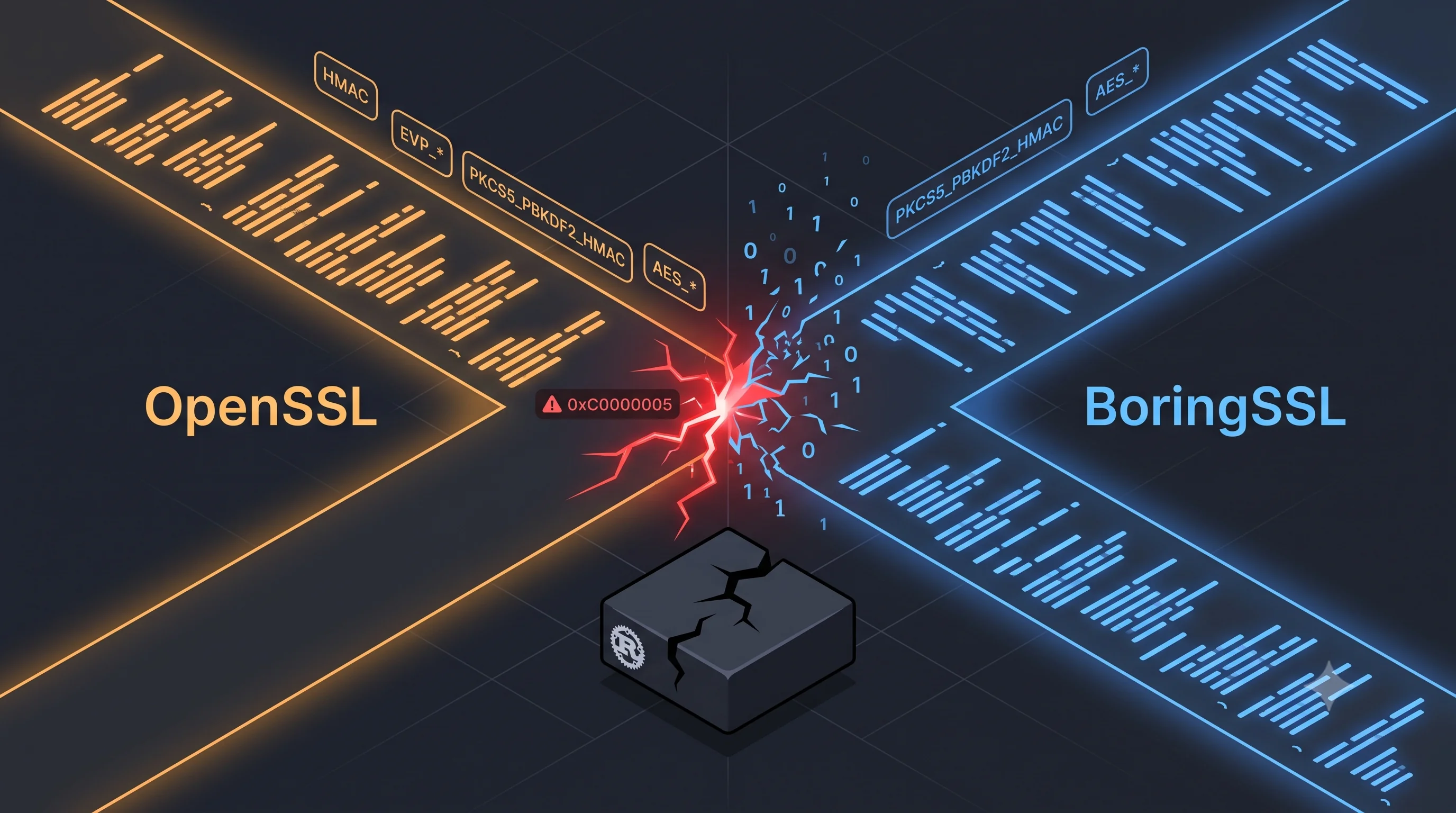
A Windows build of my chat app crashed with no Rust panic—just an access violation deep in C. Tracking it down meant learning how compilation, symbols, and linking actually work underneath cargo.
Two Cryptos, One Binary: How Rust Links With C (and How I Got Heap Corruption) — Read more →